


I’ve been looking for natural ways to improve focus and mood. Kratom and coffee are often talked about in the U.S. I’ll share tips and safe ways to try them together in your morning routine.
Kratom and coffee are natural boosters. Coffee’s caffeine makes you more alert. Kratom can give you energy, help with pain, or lift your mood. Mixing them can lead to smoother energy, but it varies by person.
I’ll give you practical advice on how to mix them. You can try them one after the other, blend them, or take supplements. Start with small amounts, like 1–2 g of kratom and 60–100 mg of caffeine. Remember to stay hydrated, eat before trying, and keep track of how you feel.
Key Takeaways
- Kratom and coffee can enhance focus and mood when used wisely.
- Start with small amounts: 1–2 g kratom and 60–100 mg caffeine for first tries.
- Experiment with sequential use or blended drinks and note the timing and effects.
- Drinking water and eating can reduce side effects like jitters or nausea.
- I’ll discuss risks, recipes, pairings, and safe practices in the sections below.
What kratom is and how it works
Kratom is known by its scientific name, Mitragyna speciosa. It’s a tropical tree that’s part of the coffee family. People in Thailand and Malaysia chewed its leaves for energy and to relieve pain.
Today, kratom is also used for mood support and as a social drink. This explains why it’s becoming popular.
Botanical background and traditional uses
The tree grows in Southeast Asia. Local workers chewed its leaves to stay alert and productive. This history is why some people mix kratom with coffee for energy.
Key alkaloids and mechanisms of action
Kratom contains two main alkaloids: mitragynine and 7-hydroxymitragynine. These molecules interact with opioid receptors and affect the body’s energy levels. The effects change based on the dose.
At low doses, kratom can be stimulating. At higher doses, it can be calming and help with pain. This is different from opioids, but it still carries risks of dependence and withdrawal.
Common kratom strains and expected effects
Kratom strains differ by vein color and where they’re grown. White and green veins are stimulating. Red veins are more relaxing and help with pain.
When mixing kratom with coffee, the type of kratom matters. Stimulating strains work well with coffee. But red strains might clash with coffee’s energizing effects.
| Strain | Typical Effects | How it pairs with coffee |
|---|---|---|
| White vein | Energy, focus, sociability | Complementary—boosts alertness with kratom and coffee effects |
| Green vein | Mild stimulation, balanced mood | Blends well—adds smooth focus to a coffee routine |
| Red vein | Relaxation, analgesia, sedation | Potential clash—may counteract caffeine or create uneven effects |
| Vendor variability | Potency and labeling differ by source | Sourcing matters for predictable kratom and coffee interactions |
Coffee fundamentals: caffeine, benefits, and how it affects the brain
I explain caffeine’s basics and why it’s great with other plants. I talk about how caffeine works fast, its benefits, and how roast and brew affect taste and energy. This info helps people choose the right blends, including those with kratom.
How caffeine works: adenosine blockade and neurotransmitter effects
Caffeine blocks adenosine receptors, stopping sleep signals. This raises dopamine and norepinephrine, making us more alert and happy.
This quick energy boost can work well with kratom. People looking to buy kratom and coffee want to know how to mix them for the best effect.
Well-known benefits of coffee
Coffee improves focus, mental clarity, and exercise performance. It may also lower Parkinson’s and Alzheimer’s risk and boost metabolism.
Those interested in kratom and coffee should know coffee boosts alertness. Kratom can change mood or comfort. It’s wise to try them together carefully to see how you react.
Different coffee types and brewing impact
I discuss how roast and brew method change coffee’s taste and energy. Dark roasts are smoother and pair well with bitter kratom. Light roasts are brighter but might upset stomachs.
Brew strength affects caffeine content. A standard cup has about 60–120 mg. Adjusting roast and brew helps manage taste and energy when mixing with kratom.
| Factor | Effect on Flavor | Effect on Stimulation | Notes for kratom and coffee pairing |
|---|---|---|---|
| Roast level | Light: bright, acidic; Dark: smooth, bitter | Light may taste sharper; dark can feel milder | Choose dark roast for bitter kratom; light roast if you prefer brightness |
| Brew method | Espresso: concentrated; Pour-over: clean; French press: full-bodied | Stronger brews raise caffeine per ounce | Use milder brews for sensitive users seeking gentle kratom and coffee effects |
| Grind size | Fine: intense extraction; Coarse: lighter extraction | Finer grind typically increases caffeine yield | Adjust grind to control strength when mixing with kratom |
| Serving size | Single shot vs. large mug alters flavor balance | Larger servings raise total caffeine | Monitor servings and know where to buy kratom and coffee from reputable vendors to ensure consistent effects |
kratom and coffee: interaction, synergy, and why people combine them
I mix kratom and coffee to start my day. It’s not about extremes but finding balance. The two work on different brain systems, leading to a harmonious effect.

Caffeine boosts dopamine and norepinephrine by blocking adenosine. Kratom’s alkaloids interact with opioid and adrenergic receptors. This mix can make you feel more alert and calm at the same time.
People say combining kratom and coffee improves their focus and energy. A mix of white or green kratom with a light roast coffee gives a clean energy boost. It helps you stay sharp without feeling anxious.
Some use this mix for work or study, while others want to feel more social without alcohol. It’s also good for those with chronic pain, as it keeps you alert and helps with discomfort. But, it’s not for everyone. If you have heart issues, high blood pressure, are pregnant, or take certain medications, talk to a doctor first.
Here’s a quick guide to help you decide if kratom and coffee are right for you:
| Motivation | Example Pairing | Expected kratom and coffee effects |
|---|---|---|
| Morning focus | Light roast coffee + green vein kratom (low dose) | Raised alertness, balanced mood, sustained concentration |
| Energy with calm | Medium roast + white vein kratom (microdose) | Quick arousal, cleaner energy, reduced jitters |
| Pain management while staying active | Dark roast espresso + red vein kratom (moderate dose) | Pain relief with daytime wakefulness, careful dosing required |
| Social energy without alcohol | Cold brew + green or white vein kratom | Elevated mood, increased sociability, steady stamina |
Popular kratom and coffee combinations and recipes
I explore simple ways to pair kratom with coffee so you can test effects and flavor without guesswork. Start low, note how you feel, and adjust slowly to find a mix that works for your routine.
Sequential use approaches
I use two main approaches when I want clear, controllable effects. One method is coffee first, then kratom. That can extend steady energy through a longer morning.
Another option is kratom first, then coffee to ramp up focus. Staggering by 20–60 minutes helps me spot sensitivity and avoid sudden overstimulation.
For beginners I recommend starter doses: kratom 1–2 g (stimulating range) and coffee 60–100 mg (about half to one cup). Keep a small notebook to track how each sequence affects mood and focus.
Blended beverage ideas
A popular way to marry taste and effect is to brew kratom tea and add it to coffee. That dilutes bitterness and gives me precise dose control.
I also stir kratom powder into hot coffee. This can be gritty unless you use a frother or blender. For a creamy option I make kratom-coffee lattes or smoothies with oat milk, vanilla, and a touch of honey.
Instant kratom-coffee blends exist in niche markets, but quality varies. I prefer making my own so I control potency and avoid unwanted additives.
Capsules, extracts, and convenience options
Capsules remove taste and simplify dosing. I take a capsule with my coffee when I need convenience, knowing onset may be slightly delayed.
Extracts such as tinctures or resins are far more potent. I treat them with extreme caution and reduce both kratom and caffeine when I use extracts. Start conservative and buy lab-tested products from reputable U.S. vendors.
For travel or busy mornings, I keep a small kit: measured capsules, a travel French press, and a milk frother. That setup lets me follow popular kratom and coffee recipes without a lot of fuss.
| Approach | Typical Dose | Onset | Notes |
|---|---|---|---|
| Coffee then kratom | Coffee 60–100 mg; kratom 1–2 g | Coffee 15–30 min; kratom 20–45 min | Extends energy; easy to titrate |
| Kratom then coffee | Kratom 1–2 g; coffee 60 mg | Kratom 15–45 min; coffee 15–30 min | Can boost alertness quickly; watch for overstimulation |
| Blended beverage | Kratom tea from 1–3 g + regular brew | 20–45 min | Flavor control; smoother texture with milk or blender |
| Capsules with coffee | Capsule equiv. 1–3 g + coffee 60–100 mg | 30–60 min | Convenient; delayed onset; reliable dosing |
| Extracts and tinctures | Very small doses (see vendor guidance) | 10–30 min | High potency; reduce caffeine; source lab-tested kratom and coffee supplements |
Best kratom and coffee blends and pairings
I test different mixes for mornings, afternoons, and evenings. I aim for a balance to keep the experience pleasant and predictable. Here are some strain-to-roast suggestions, recipe tips, and popular pairings I enjoy.
Strain and roast pairing suggestions
White vein kratom is energizing. I pair it with medium or dark roast espresso for focus without sharp acidity. Dark roast is gentler on the stomach with kratom.
Green vein kratom offers a balance between energy and calm. I prefer it with a medium roast French press for steady energy without jitters.
Red vein kratom is calming. For a gentle mood lift, I choose decaf or a small espresso shot. This keeps the drink calm and avoids overstimulation.
Recipe tips for taste and effect balance
I start with small amounts of kratom and coffee, adjusting as needed. Brewing kratom tea separately helps control bitterness and potency.
To enhance mouthfeel, I blend with a high-speed blender or milk frother. Adding milk, cocoa, cinnamon, or honey masks flavors without hiding effects.
Drinking water and a light snack before can prevent nausea. If blending, straining or letting the mixture settle makes the texture smoother.
Examples of popular pairings
I keep notes on my experiments. This helps me refine my preferences over time.
- White vein kratom + dark roast espresso for focused mornings and crisp clarity.
- Green vein kratom + medium French press for balanced energy across long work sessions.
- Small red vein dose + decaf or a single espresso shot for a calm, uplifted mood without strong stimulation.
For more detailed ideas on blending techniques and step-by-step kratom and coffee recipes, I refer to this practical guide from Bedrock Botanicals: kratom and coffee pairings. Their tips are helpful when I tweak proportions or try new roast and strain combos.
When experimenting with the best kratom and coffee blends, I document dose, roast, strain, and effects. This simple log helps me repeat successful mixes or avoid those that upset my stomach or cause overstimulation.
Safety, risks, and best practices for combining stimulants
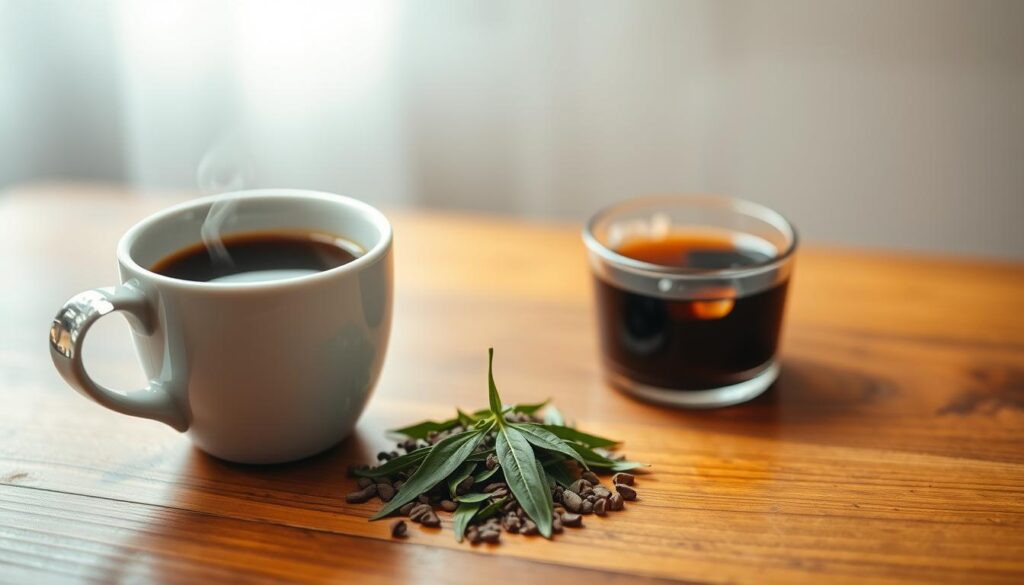
I look at common side effects to help you make safer choices. Mixing kratom with coffee can lead to anxiety, jitteriness, and a faster heart rate. You might also feel nauseous, have stomach cramps, acid reflux, and feel overstimulated.
Watch for signs like persistent palpitations, severe nausea, fainting, or confusion. These are serious and need medical help. Mild tremors or nervousness are usually okay but mean you should slow down or wait before taking more.
Common side effects to watch for
Start with small amounts to avoid bad reactions. A good starting point is 1–2 g of kratom and 60–100 mg of coffee. Taking them at different times can help avoid feeling overwhelmed.
Drink water and eat before using them. This can help prevent stomach upset and acid reflux. Keeping a dosage journal helps you notice patterns that might affect your sleep, mood, or how your body reacts.
Tolerance, dependence, and responsible use guidelines
Regular use of kratom or caffeine can lead to tolerance. You might need more to feel the same effect. Kratom can also lead to dependence and withdrawal if used too much.
Try to avoid daily use of high doses and include sober days. If you find you need more to feel normal, stop and talk to a doctor about tapering off.
Harm reduction and medical considerations
Choose vendors that test their products and share the results. Knowing where to buy kratom and coffee with verified quality can help avoid contamination and ensure safer use.
Don’t mix these stimulants with alcohol, benzodiazepines, opioids, or sedatives. People with heart disease, high blood pressure, liver disease, or pregnant or nursing women should talk to a doctor first.
Remember, some U.S. states have laws about kratom sales. If you notice signs of dependence or severe side effects, get medical help. For more information and blend ideas, check out trusted supplier guides that can help you find lab-tested products.
Real user experiences and anecdotal evidence
I gather stories from forums, Reddit, and talks with users to show how kratom and coffee work together. People often talk about how they feel more focused, energetic, and in a better mood. For more details, check out this study: user reports and analyses.
Commonly reported positive outcomes
Many say that mixing low-to-moderate kratom with coffee helps them stay focused without the jitters. They talk about feeling more energized and having a slight mood boost. This helps them feel more confident and productive.
Some users find that certain kratom and coffee mixes help them feel less tired in the mornings. They say that a light to medium roast coffee with a mild kratom makes them more productive. They also mention fewer mid-morning crashes and better concentration.
Mixed and negative reports
Not everyone has a positive experience. Some report feeling anxious, having a racing heart, nausea, or stomach issues when the mix is too strong. They warn against mixing sedating red kratom with dark roasts, as it can cause discomfort.
There are also stories of misuse. Mixing strong kratom extracts with coffee can lead to overstimulation and unwanted side effects. It’s important to be careful when combining potent products.
Variables that influence outcomes
Many things can affect how you feel. The type of kratom, the dose, the coffee’s roast and caffeine level, and how it’s brewed all play a part. When and how you take them also matters.
Everyone’s body is different. Your body’s chemistry, how you react to stimulants, any medications, and your health can change how you feel. The quality and consistency of the products also matter. It’s a good idea to keep track of how you react to different combinations to find what works best for you.
- Helpful tip: Start with a small dose and a small amount of caffeine, note how you feel, and adjust slowly.
- Observation: Light roasts often pair better with stimulating strains; reds pair better with low-caffeine approaches.
- Safety: Avoid mixing strong extracts with coffee until you know your limits.
Alternatives and complementary natural boosters
I explore options beyond kratom and coffee for steady energy and mood lift. This includes plant-based choices and simple lifestyle steps. These can help without relying too much on stimulants.
Other plant-based stimulants and adaptogens
Yerba mate blends caffeine with theobromine for a smoother wakefulness. Guarana is a slow-release caffeine source that many prefer. Rhodiola rosea boosts fatigue resistance and mental endurance during stressful days.
Panax ginseng supports stamina and cognitive clarity when used carefully. Cacao-derived theobromine offers mild mood lift and vasodilation without the crash.
When to choose alternatives
Choose alternatives to kratom and coffee when stimulant stacking triggers anxiety or sleepless nights. If caffeine causes jitters, try yerba mate or theobromine. For long-term stress or chronic low energy, adaptogens like rhodiola and ginseng are better than frequent use of kratom and coffee supplements.
Combining mindfulness and lifestyle strategies
I suggest pairing any botanical approach with habits that boost natural energy. Good sleep hygiene, regular exercise, hydration, balanced meals, and timed caffeine use reduce dependency on other natural boosters. Short meditation sessions and breathwork also cut stress and sharpen focus without extra supplements.
I advise testing one change at a time. Track effects for a week before adding another plant or routine. This makes it easier to see what truly helps and when to favor alternatives to kratom and coffee over repeated use of kratom and coffee supplements.
Conclusion
Kratom and coffee can work well together if used wisely. Caffeine affects adenosine and monoamine pathways. Kratom, on the other hand, impacts opioid and adrenergic systems.
At low to moderate doses, many people feel more energized and focused. They also report a better mood. This is true when used at the right time.
Remember, safety is key. Start with small amounts of kratom (1–2 g) and coffee (60–100 mg). Drink water and eat before using them. Keep track of how you feel and avoid too much.
If you have health issues or take medicines, talk to your doctor. Buy kratom from trusted U.S. sources. Also, check local laws about where to buy these products.
For those interested in kratom-infused coffee or blending kratom and coffee, start slow. Pay attention to the type of kratom and coffee you use. If it’s not for you, try other options like yerba mate or Rhodiola.
Being mindful and cautious makes using kratom and coffee safer and more enjoyable.